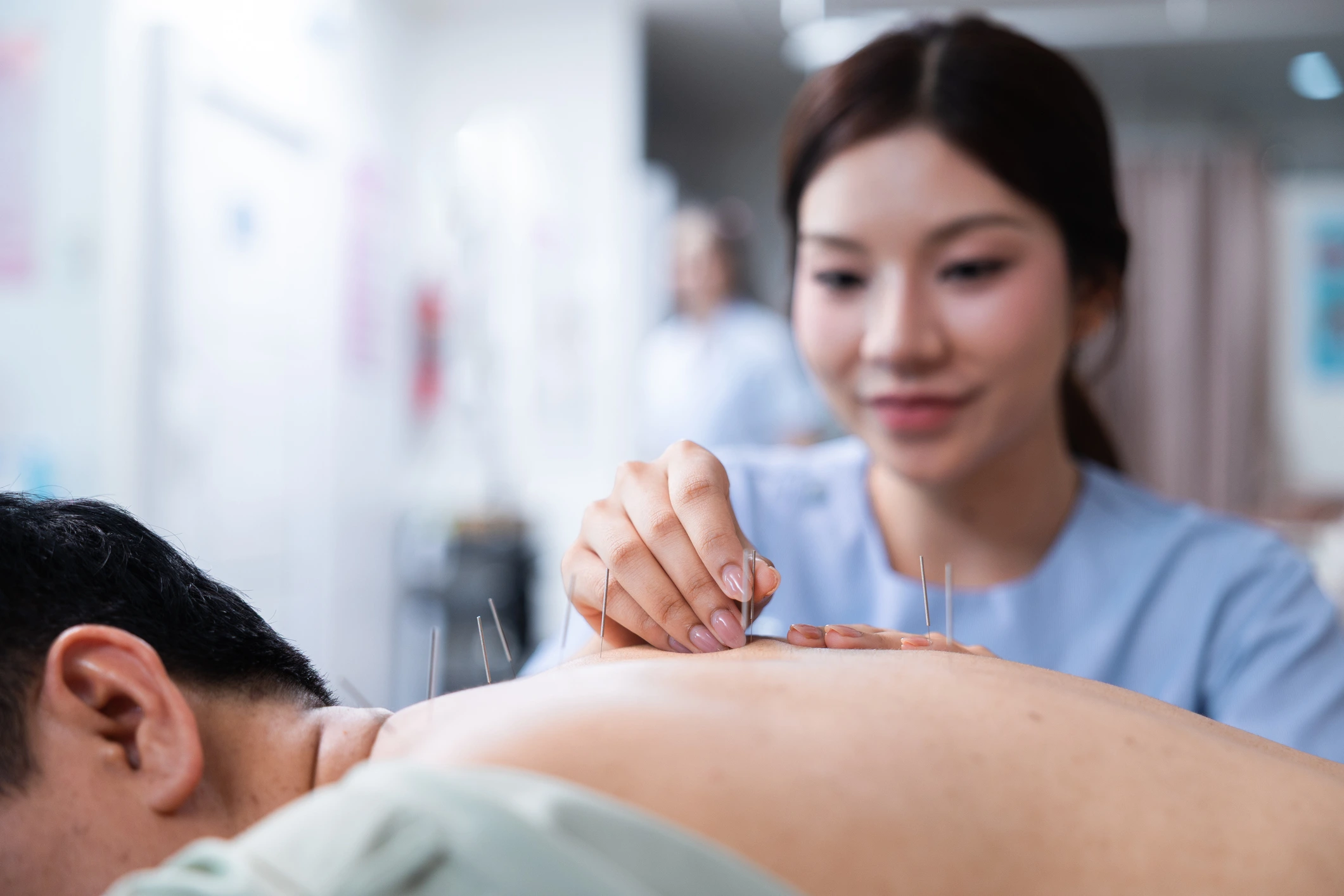
Acupuncturists assess patients, create individualized treatment plans, perform acupuncture procedures, monitor progress, and maintain clinical records. In British Columbia, the role combines Traditional Chinese Medicine knowledge with anatomy, patient safety, communication, and professional responsibility.
Here is what you should know before pursuing an acupuncture career in BC.
What Does an Acupuncturist Do?
An acupuncturist assesses a patient’s health concerns and provides care using acupuncture and Traditional Chinese Medicine, or TCM, principles.
Treatment is individualized. Acupuncturists do not use the same acupuncture points for every patient. They collect information, identify relevant TCM patterns, and select treatments based on the patient’s needs and health history.
Their responsibilities may include:
- Conducting patient consultations
- Reviewing symptoms and medical histories
- Performing TCM assessments
- Identifying appropriate acupuncture points
- Inserting sterile acupuncture needles
- Explaining treatment procedures
- Obtaining informed consent
- Monitoring patient responses
- Adjusting treatment plans
- Maintaining confidential clinical records
- Referring patients to other healthcare professionals when appropriate
In BC, the Registered Acupuncturist title allows a practitioner to provide acupuncture services within the profession’s regulated scope. It does not automatically authorize the full practice of Chinese herbal medicine, which may require a different registration class.
1. Assess Patients and Collect Health Information
An acupuncture appointment usually begins with a consultation. The acupuncturist needs to understand why the patient is seeking treatment and whether acupuncture is appropriate.
The purpose is not simply to collect a list of symptoms. The acupuncturist analyzes the information to identify relevant TCM patterns, possible contraindications, and an appropriate direction for treatment.
2. Develop an Individualized Treatment Plan
After completing the assessment, the acupuncturist develops a treatment plan based on the patient’s needs.
The plan may identify:
- Which acupuncture points will be used
- Which treatment techniques may be appropriate
- How often treatment may be recommended
- Relevant safety concerns
- How the patient’s progress will be measured
- When the treatment plan should be reviewed
This part of the job requires clinical reasoning. Acupuncturists must connect information from the consultation with their knowledge of TCM theory, anatomy, physiology, acupuncture point functions, and treatment safety.
They must also recognize when a patient’s symptoms may require assessment by a physician or another regulated healthcare professional.
3. Perform Acupuncture Treatments
During treatment, an acupuncturist inserts sterile, single-use needles into carefully selected points on the patient’s body.
The practitioner must:
- Locate acupuncture points accurately
- Position the patient safely
- Select an appropriate needling depth
- Use controlled needle techniques
- Follow infection prevention procedures
- Dispose of used needles safely
- Observe the patient throughout treatment
Because acupuncture involves procedures below the skin, clean needle practices and clinical safety are essential.
Not every practitioner provides every service. Depending on the practitioner’s education, competence, and permitted scope, treatment may also involve:
- Electro-acupuncture
- Cupping
- Moxibustion
- Acupressure
- Gua Sha
- Auricular acupuncture
- Tui Na techniques
4. Explain Treatment and Obtain Consent
Communication is an important part of an acupuncturist’s work.
This is especially important for people who are nervous about needles or have never received acupuncture. The practitioner explains the process clearly, responds to concerns, and avoids making unrealistic promises about treatment results.
5. Monitor Progress and Adjust Care
An acupuncturist should not automatically repeat the same treatment at every appointment.
During a follow-up visit, the practitioner may ask:
- How the patient felt after the previous treatment
- Whether their symptoms changed
- How long any changes lasted
- Whether they experienced an unexpected reaction
- Whether new symptoms have appeared
- Whether their health goals have changed
The acupuncturist may then adjust the point selection, treatment technique, or recommended appointment frequency.
Good clinical judgement includes knowing when to continue a treatment approach, when to modify it, and when to refer the patient to another healthcare provider.
6. Maintain Records and a Safe Clinic
Acupuncturists are responsible for maintaining accurate and confidential patient records.
Acupuncturists must also maintain a clean treatment environment, store equipment correctly, dispose of needles safely, and follow infection prevention protocols.
Those who operate their own practices may have additional responsibilities, including:
- Appointment scheduling
- Patient billing
- Supply purchasing
- Inventory management
- Clinic marketing
- Regulatory compliance
- Business administration
What Does a Typical Acupuncturist Workday Look Like?
A typical day depends on whether the acupuncturist works in a private clinic, group practice, wellness centre, or multidisciplinary healthcare setting.
Daily responsibilities may include:
- Reviewing the appointment schedule
- Preparing treatment rooms
- Conducting new patient consultations
- Providing follow-up treatments
- Cleaning and resetting treatment areas
- Updating patient records
- Answering patient questions
- Managing billing and scheduling
- Ordering clinical supplies
- Communicating with other healthcare providers
New patient appointments may take longer because the acupuncturist needs to collect a detailed health history and complete an initial assessment. Follow-up appointments may focus more on treatment, progress, and changes to the care plan.
Vancouver Career College identifies TCM clinics, wellness clinics, alternative therapy centres, and healing centres as possible work environments for Acupuncture Diploma graduates.
What Skills Do Acupuncturists Need?
Acupuncture requires a combination of clinical knowledge, practical ability, interpersonal skills, and professional judgement.
|
Skill |
Why It Matters |
|
Clinical reasoning |
Helps the practitioner analyze information and develop appropriate treatment plans |
|
Anatomy and physiology |
Supports accurate point location and safe needling |
|
Manual precision |
Helps the practitioner handle needles carefully and confidently |
|
Observation |
Supports the assessment of symptoms and treatment responses |
|
Communication |
Helps with explanations, consent, and professional relationships |
|
Active listening |
Allows the practitioner to collect useful patient information |
|
Empathy |
Supports respectful, patient-centred care |
|
Attention to detail |
Reduces safety risks and improves record accuracy |
|
Professional boundaries |
Protects the practitioner-patient relationship |
|
Business skills |
Supports scheduling, billing, supplies, and clinic management |
Clinical Reasoning
Acupuncturists must collect information, identify TCM patterns, consider contraindications, and make treatment decisions. The role involves much more than memorizing acupuncture points.
Anatomy and Physiology Knowledge
A detailed understanding of the human body is essential. Practitioners need to recognize anatomical landmarks and identify areas where needling may involve additional risk.
Manual Precision
Acupuncture is detailed, hands-on work. Practitioners need steady hand control, accurate point location, and careful palpation skills.
Communication and Listening
Patients may describe complex symptoms or sensitive health concerns. Acupuncturists need to listen carefully, ask appropriate questions, and explain treatment in understandable language.
Empathy and Professionalism
Patients should feel respected and safe. Acupuncturists need compassion, but they must also protect patient confidentiality and maintain appropriate professional boundaries.
How You Can Train to Be an Acupuncturist in BC
To train to be an acupuncturist, you need more than a short acupuncture class. Professional practice requires structured education, practical skills development, supervised clinical experience, examinations, and provincial registration.
Prospective students should review both:
- The admission requirements for an acupuncture program
- The professional registration requirements for practising in BC
Admission to an acupuncturist course does not automatically guarantee eligibility for professional registration. Students should understand the complete pathway before enrolling.
The Vancouver Career College Acupuncture Diploma Program in Burnaby is delivered through in-class instruction and currently consists of 1,920 hours over 96 weeks.
The curriculum includes:
- Principles of Traditional Chinese Medicine
- TCM diagnostic methods
- TCM pattern differentiation
- Acupuncture meridians and pointology
- Human anatomy and physiology
- Musculoskeletal anatomy
- Basic and advanced acupuncture techniques
- TCM and acupuncture safety
- Patient counselling
- Biomedical sciences
- Medical tests and diagnosis
- Practice management and regulations
- Acupuncture case studies
- Supervised clinical practice
Students also study infection prevention, clean needle techniques, risk management, patient assessment, clinical documentation, and professional communication.
The program includes a 40-hour Introduction to Clinical Practice course and 420 hours across four supervised clinical practice courses. Students progress from observation and simulated practice to working with patients under instructor supervision.
The final stage of the curriculum includes an Acupuncture Summary course designed to prepare students for the Pan-Canadian written and clinical case-study examinations for acupuncturists.
Vancouver Career College’s Acupuncture Diploma in Burnaby is recognized by CCHPBC; it meets the academic requirements to sit for the PAN-CAN exams and brings these elements together through:
- TCM and biomedical coursework
- Hands-on technique development
- Supervised clinical practice
- Preparation for the Pan-Canadian acupuncture examinations.
For a complete overview of the education and registration process, read How to Become an Acupuncturist in BC.
Is Acupuncture the Right Career for You?
Acupuncture may suit you if you are interested in healthcare, Traditional Chinese Medicine, detailed clinical work, and building professional relationships with patients. The role also requires strong communication, careful recordkeeping, manual precision, and a commitment to patient safety.
The Vancouver Career College Acupuncture Diploma in Burnaby combines classroom learning with supervised clinical training for students preparing to pursue an acupuncture career in BC.